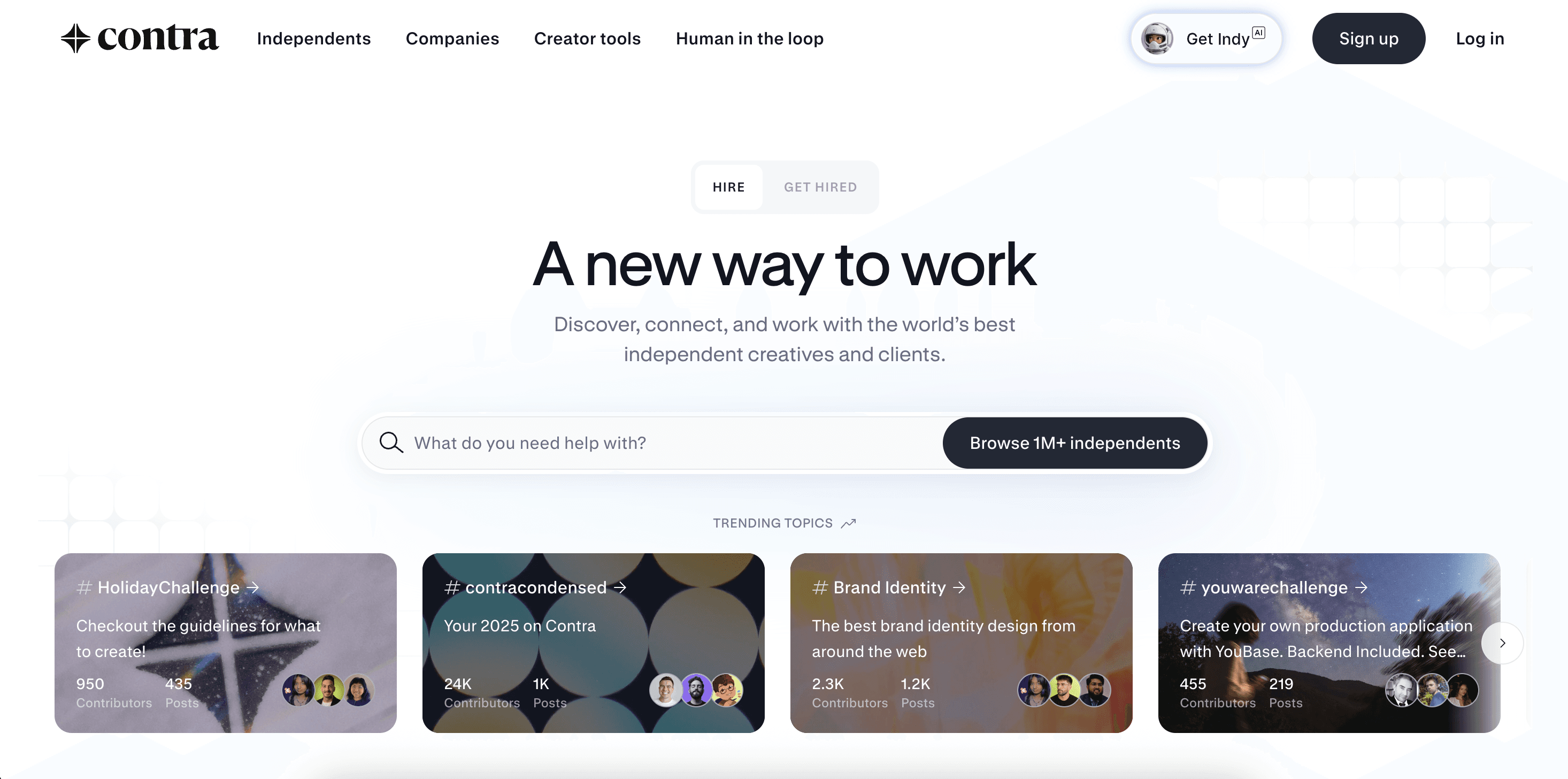
Is Contra Legit? A 2026 Review
Contra has been gaining steady traction as a modern alternative to traditional freelance marketplaces. With messaging centered on zero commissions, built-in contracts, and tools designed specifically for independent workers, it positions itself very differently from platforms like Upwork or Fiverr.
That raises a fair question for freelancers and contractors considering it: Is Contra actually legit, or just another platform with nice branding and limited results?
Short answer: Yes, Contra is legitimate. It’s a commission-free platform designed to help freelancers and independent professionals find work, manage clients, and get paid without platform fees. However, it’s not a universal solution for every type of job seeker.
This review takes a closer look at how Contra works, what kinds of jobs you’ll find, pricing, safety, pros and cons, and who Contra is best suited for in 2026.
What Is Contra?
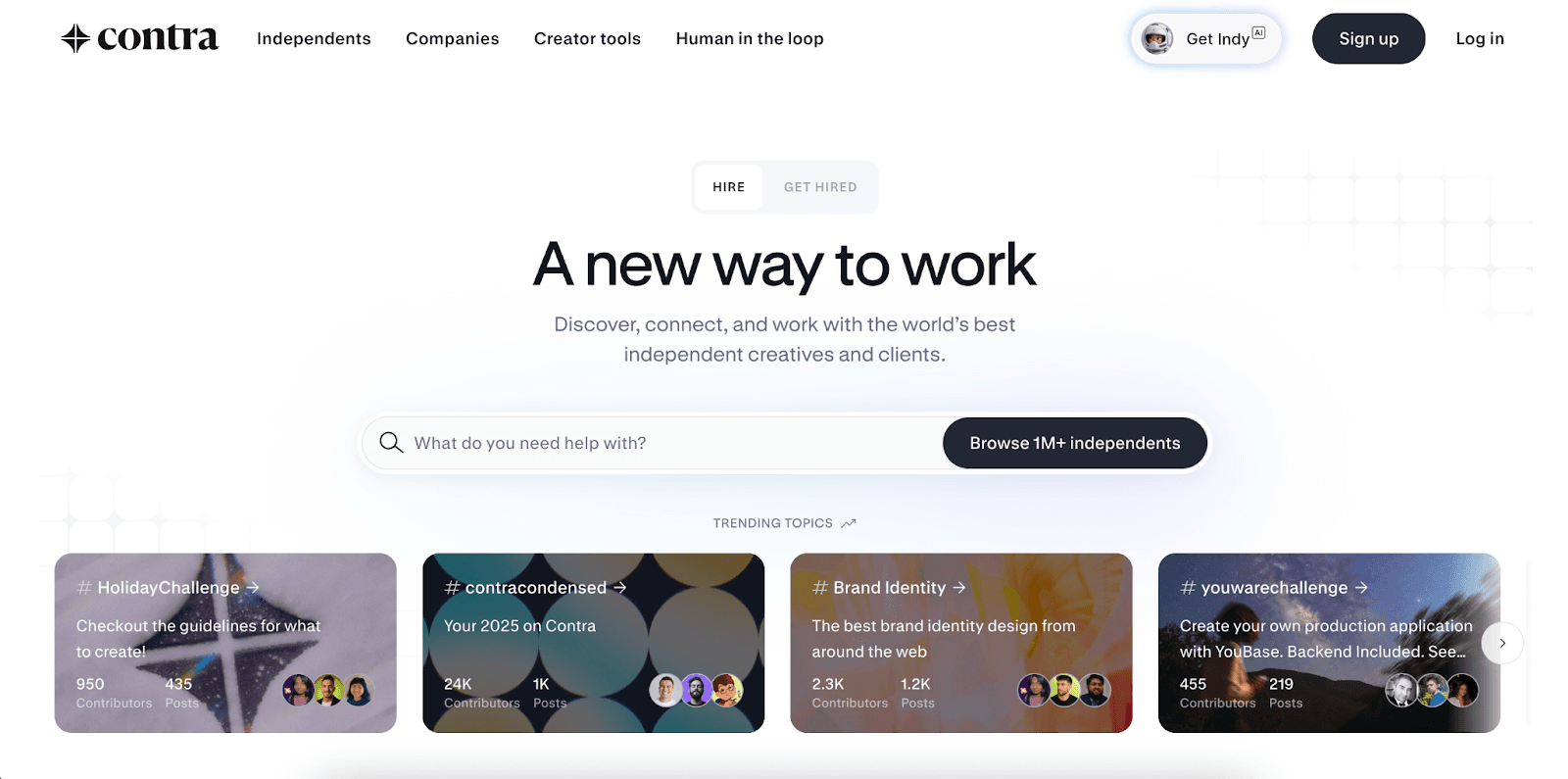
Contra is an all-in-one platform built specifically for independent work, not traditional employment. Instead of acting solely as a job board, Contra combines job discovery with tools that help freelancers actually run their business.
At its core, Contra offers:
A job feed for freelance and contract roles
Public profiles and portfolios
Built-in contracts, invoicing, and payments
Client and project management tools
Rather than taking a cut of each project, Contra focuses on helping independents operate more professionally while keeping full ownership of their earnings.
Most roles on Contra are flexible and often remote by default, but Contra frames itself less as a “remote job board” and more as infrastructure for freelance careers.
Is Contra Legit?
Yes, Contra is a legitimate and established platform.
It reports over one million independent users and tens of thousands of companies using the platform. Businesses posting jobs on Contra are real companies, ranging from startups to established brands hiring for contract and project-based work.
One of Contra’s biggest credibility signals is its business model. Unlike commission-based marketplaces, Contra does not take a percentage of freelancer earnings. Instead, it monetizes through optional subscriptions and premium features. This aligns incentives more closely with freelancers rather than encouraging volume-based bidding or race-to-the-bottom pricing.
Payments, contracts, and invoices are handled through secure, well-known payment processors, adding another layer of legitimacy.
Want to skip the manual applying?
Whichever platform you use, applying to remote roles one at a time takes hours. JobCopilot works differently: upload your resume once and it applies to matched remote roles for you every day, so you can spend your time on interviews instead of application forms. See how it works.
How Contra Works for Job Seekers
Contra works differently than traditional job boards where success depends almost entirely on submitting applications.
On Contra, freelancers can:
Build a public profile with work samples and experience
Apply directly to roles in the job feed
Get discovered by companies browsing talent
Invite existing clients to manage work through Contra
Once hired, Contra centralizes the business side of freelancing. Contracts, scope, invoices, and payments all live in one place, reducing the need for external tools.
This setup rewards strong profiles and consistency over time. Many freelancers see better results after optimizing their profile and remaining active, rather than relying on mass applications.
Types of Jobs You’ll Find on Contra
Contra focuses almost entirely on independent, non-W2 work. You won’t find many traditional full-time salaried roles.
Common categories include:
Design (brand, UI/UX, illustration, motion, 3D)
Engineering and development (frontend, backend, no-code)
Marketing, SEO, and growth
Content, video, and social media
Product, consulting, and fractional leadership roles
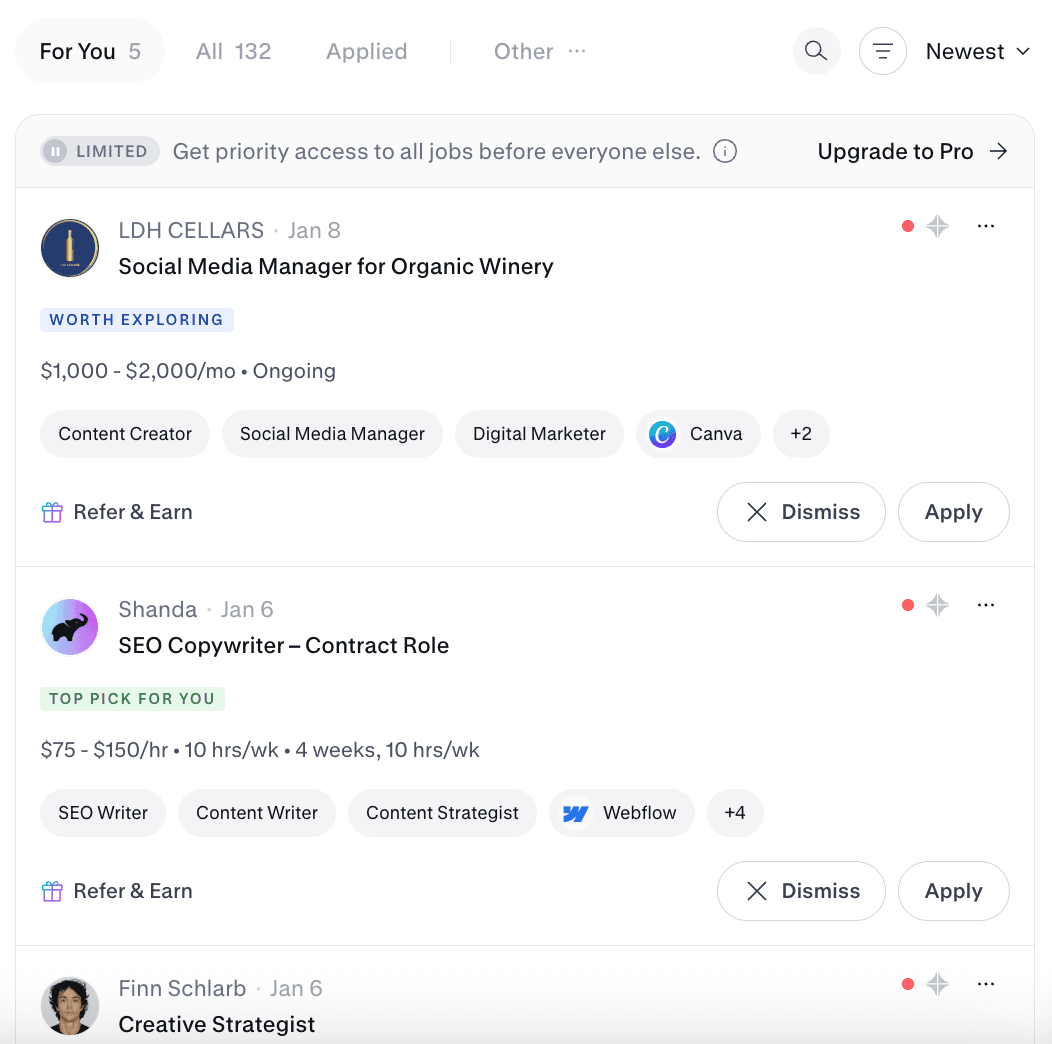
Many roles are project-based, but longer-term contracts and ongoing retainers are also common. Budgets and pay structures vary, with a noticeable tilt toward mid-to-senior-level freelance work rather than entry-level gigs.
Job Discovery and Indy AI
Contra emphasizes discovery as much as applications.
Freelancers can find opportunities by:
Browsing the job feed
Getting matched to roles based on profile signals
Being contacted directly by companies
Using Indy AI, Contra’s opportunity discovery tool (Pro feature)
Indy AI scans platforms like LinkedIn and X to surface relevant opportunities in one place. While it doesn’t replace applying directly, it can save time and broaden exposure to roles outside Contra’s native listings.
This discovery-first approach means Contra often works best as a longer-term channel, rather than a quick job-hunting fix.
Contra Free vs. Contra Pro
Contra offers both a free plan and a paid upgrade.
Free Contra Account
With a free account, freelancers can:
Create a public profile and portfolio
Apply to jobs
Send contracts and invoices
Accept payments with zero commission
Manage clients and projects
Unlike many platforms, Contra does not limit core functionality behind a paywall. For freelancers just starting out or testing the platform, the free plan is fully usable.
Contra Pro
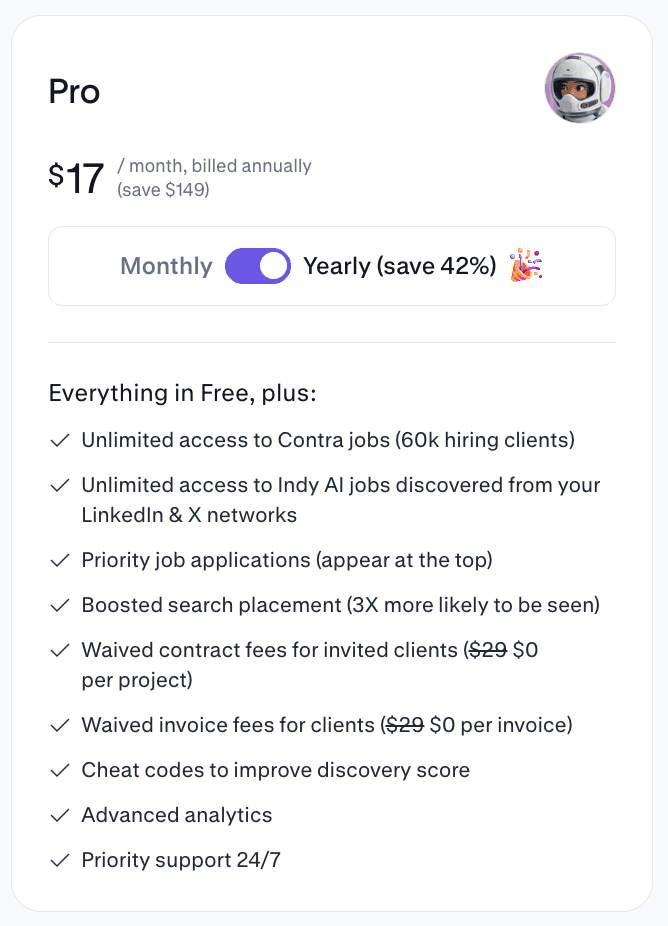
Contra Pro costs $199 per year (or monthly) and is aimed at freelancers actively growing their business.
Pro features include:
Increased visibility in search and applications
Advanced analytics on profile performance
Portfolio customization and branding tools
Priority discovery via Indy AI
Fee-free client invites at higher volume
While Pro can improve exposure, it’s not required to earn money on Contra. Its value depends on how actively you use the platform.
Pros and Cons of Contra
Pros
0% commission on freelancer earnings
Clean, modern interface
Built-in contracts, invoicing, and payments
Strong focus on independent professionals
Less race-to-the-bottom pricing than marketplaces
Cons
Smaller job volume than massive platforms
Not designed for traditional full-time jobs
Results depend heavily on profile quality
Pro subscription needed for maximum visibility
Slower payoff compared to mass-application boards
Is Contra Safe to Use?
Yes, Contra is generally considered safe.
Payments are handled through the platform, contracts are built in, and companies are tied to verified accounts. This reduces risk compared to off-platform arrangements common in informal freelance hiring.
That said, standard freelance precautions still apply:
Clarify scope and deliverables before starting
Avoid unpaid trial work
Review client history when available
Contra’s structure helps reduce risk, but freelancers are still responsible for due diligence.
Who Contra Is Best For
Contra is a strong fit for:
Freelancers and independent contractors
Designers, developers, marketers, and consultants
Creatives building a personal brand
Professionals managing multiple clients
Freelancers tired of commission-based platforms
It’s especially useful for those who want both job discovery and business infrastructure in one platform.
Who Contra May Not Be Ideal For
Contra may not be the best choice if you:
Only want traditional full-time employment
Prefer highly curated salaried job boards
Want instant, high-volume applications
Are looking for entry-level or hourly gig work
In those cases, Contra works better as a secondary platform rather than a primary one.
Alternatives to Contra
Many freelancers use Contra alongside other platforms depending on their goals:
Each serves a different niche in the independent work ecosystem.
Final Verdict: Is Contra Worth Using in 2026?
Yes, Contra is a legitimate and well-designed platform for independent professionals.
It won’t replace traditional job boards, and it’s not meant to. Instead, Contra shines as a commission-free environment where freelancers can find work, manage clients, and get paid without giving up a percentage of their income.
For freelancers serious about building a sustainable independent career in 2026, Contra is absolutely worth considering, especially as part of a broader job-search and client-acquisition strategy.